

Were Our Beliefs Chosen by Us, or Inherited from the World We Were Born Into?
Have you ever stopped to ask yourself why you believe what you believe?
Why do some people worship one God, while others worship many gods? Why do some trust science to explain the world, while others turn to ancient traditions passed down by their ancestors? And why do some people believe that death marks the end of life, while others see it as the beginning of another journey? We often speak about our beliefs as though we arrived at them entirely through our own thinking. But have we ever examined how those beliefs first entered our lives?
Think about it. Before you could read a religious book, understand a sermon, or question a traditional practice, you were already being introduced to a particular way of seeing the world. Someone was teaching you what was right and wrong, what was sacred, what to respect, and what to avoid.
You may have grown up believing that your family’s way of worshipping was the natural way to worship. Perhaps you never questioned it because everyone around you believed the same thing. But what if you had been born somewhere else? Before we learn to question our beliefs, we first learn to live by them. To understand this, imagine four babies born on the same day, at exactly the same hour, in four different parts of the world.
One is born in Nairobi, Kenya. Another arrives in New Delhi, India. The third is born in Riyadh, Saudi Arabia. The fourth enters the world in a traditional African village where elders continue to pass their customs and wisdom from one generation to the next.
At birth, none of these children has chosen a religion, a language, a nationality, or a culture. None has read the Bible, the Qur’an, or the Vedas. None has decided whether to follow an inherited spiritual tradition or question it. They are simply children, dependent on those who care for them.
Yet, as they grow, their lives begin to take different directions. Their families introduce them to different beliefs, customs, stories, and explanations of life. What each child learns gradually becomes part of how they understand the world.
The differences do not arise because one child was born knowing more than the others. They develop, in large part, because the children grow up in different environments. We do not choose the soil into which we are born, but that soil helps determine the first roots of our beliefs.
If You Had Been Born Somewhere Else, Would You Believe Something Different?
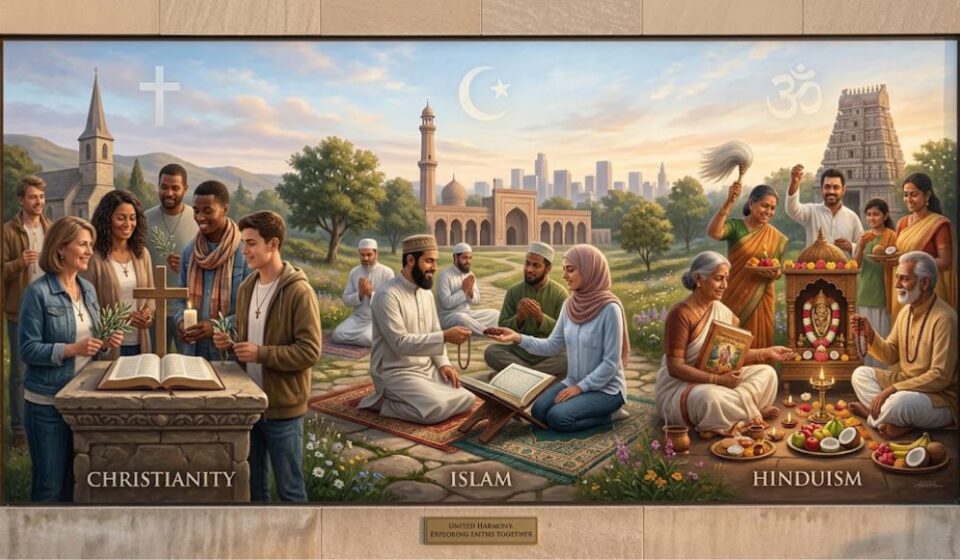
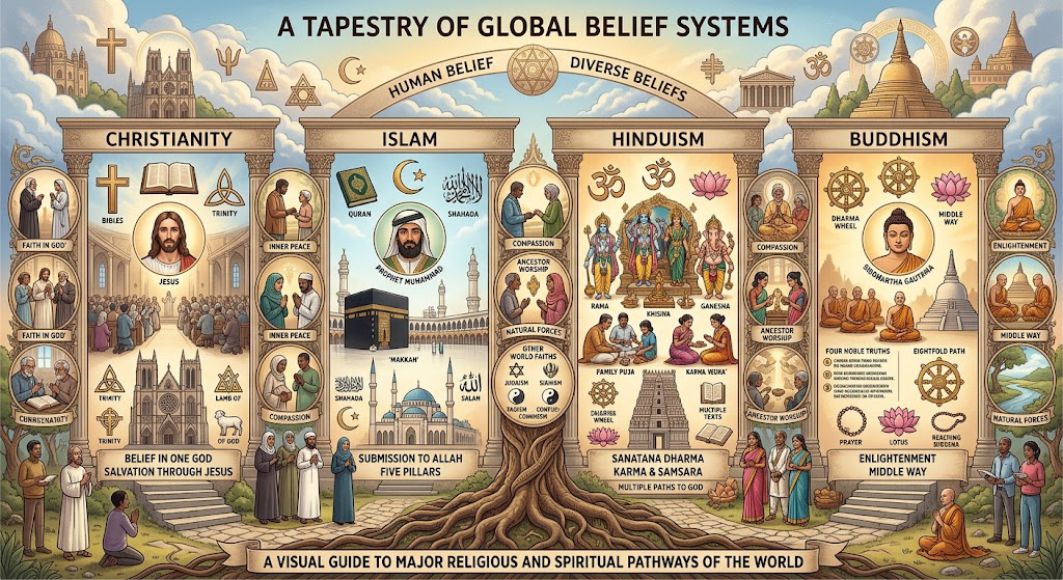
Let us return to our four children and imagine their lives ten years later. In Nairobi, the first child may grow up in a Christian home. Sunday mornings mean getting ready for church, family prayers, and Bible stories. Christmas and Easter become important occasions, and the child learns about God through the teachings and practices of the family and church.
In New Delhi, the second child may grow up celebrating Hindu festivals, listening to stories about deities, and learning religious customs from parents and grandparents. These practices become part of family life, carrying memories, meaning, and a sense of belonging.
In Riyadh, the third child may hear the call to prayer throughout the day. The family introduces the child to the Qur’an and teaches the importance of prayer, charity, compassion, and devotion to God.
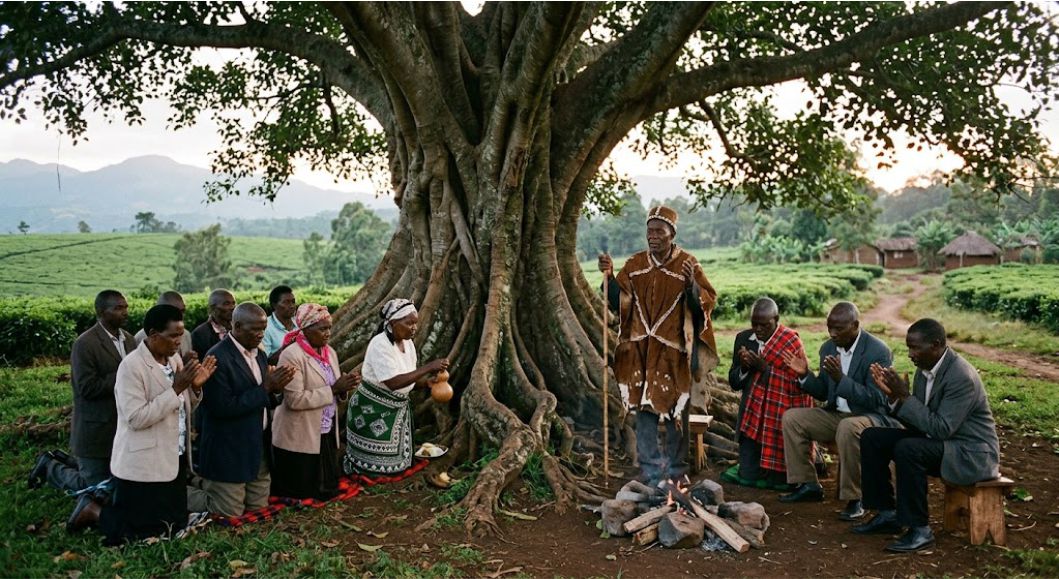
Meanwhile, in the African village, the fourth child may learn about the Creator through elders, proverbs, community gatherings, ceremonies, and stories explaining the relationship between human beings, the natural world, and the spiritual realm.
Each child is growing up with a different understanding of life and the sacred. What is important here is not deciding which child is right or wrong. It is recognizing that each child’s earliest understanding of the world is shaped by the people, practices, and experiences surrounding them.
The same process happens in ordinary life. A child learns how to greet elders by watching adults. They learn what the family considers respectful by observing how people behave. They discover what is celebrated, what is mourned, and what is considered unacceptable long before they can explain the reasons behind these customs.
Parents and grandparents are not necessarily trying to impose something harmful. Most are passing on what they sincerely believe will help their children live good and meaningful lives. They, too, inherited much of what they teach. In this way, beliefs travel through generations, often without anyone stopping to examine where they began.
Every generation receives a story from the past, lives it in the present, and passes some version of it to the future. This raises an important question: if our earliest beliefs are shaped by our surroundings, how much of what we later defend as our personal choice began as someone else’s teaching?
When Does a Child Begin to Learn What to Believe?
Long before children can explain their beliefs, they are learning through observation. A toddler does not need a lecture on language before beginning to speak. The child listens, imitates, makes mistakes, and gradually learns. In much the same way, children observe how adults pray, celebrate, respond to suffering, and treat other people.
A child who regularly sees family members praying may grow up considering prayer a natural part of life. Another child may grow up watching elders conduct traditional ceremonies and come to regard those practices as an essential part of community life. Neither child has necessarily compared different religious or cultural systems. They have learned first from the world closest to them.
Consider the language you speak most naturally. Did you examine Kiswahili, Kikuyu, English, Arabic, and every other language before deciding which one to speak? Of course not. You learned the language spoken around you. It became familiar because you heard it every day, used it to communicate, and associated it with the people you loved.
Beliefs can develop through a similar process. We inherit stories before we investigate them, learn customs before we understand their origins, and absorb values before we can explain why they matter.
As we grow older, these beliefs become connected to family memories, friendships, celebrations, and our sense of identity. Questioning them may therefore feel like questioning the people who raised us.
Imagine someone telling you that a tradition your grandmother practised was meaningless or that a belief your parents taught you was foolish. Even if you were willing to listen, you might feel hurt. The issue would no longer be just the belief itself; it would also involve your memories, family, and sense of belonging.
This helps explain why discussions about religion and culture can become emotional so quickly. Sometimes, when people feel their beliefs are under attack, they feel that their identity and family history are under attack too. Recognizing this does not mean we must accept everything we inherit without question. It means we should understand why beliefs matter to people before engaging them in difficult conversations.
Do We Really Know Enough to Judge Other People’s Beliefs?
We live in a world where opinions are formed quickly. Someone watches a short video about another religion, hears a story about an unfamiliar ceremony, or reads a social media post about a cultural practice. Within minutes, they may feel qualified to condemn an entire community. But can a few minutes of exposure tell us the whole story?
Imagine walking into a library, reading one page from one book, and then announcing that you understand everything in the building. You would hardly expect anyone to take that claim seriously. Yet we sometimes do the equivalent when discussing the beliefs of other people.
We may know a few verses from another religion but little about its history. We may have witnessed a traditional ceremony without understanding its purpose. We may have heard an explanation from someone who does not belong to the community being discussed, yet treat that explanation as the final word. The problem is not that we ask questions. Asking questions is essential to learning. The problem arises when we mistake limited knowledge for complete understanding.
Even within a single religion, people may interpret teachings differently. Christianity has many denominations, each with its own traditions and approaches to scripture. Islam includes different schools of thought and diverse cultural expressions. African Traditional Religions also encompass many distinct spiritual traditions, shaped by different peoples, languages, histories, and ways of life. Understanding one tradition does not automatically mean understanding every tradition within that broader category.
For example, a person who has attended church all their life may understand Christian worship very well but know little about the meaning of a ceremony in another community. Likewise, someone raised in an African traditional setting may have deep knowledge of their own people’s customs without knowing much about Hindu philosophy or Islamic theology.
There is nothing shameful about these limitations. No individual can master every belief system in the world. The real problem begins when we refuse to acknowledge what we do not know. Knowledge should make us more curious, not more arrogant. The more we learn, the more carefully we should judge what we do not yet understand.
Could Our Confidence Be Greater Than Our Understanding?
One of the easiest mistakes to make is confusing what feels familiar with what must be true for everyone.
A person who has attended church since childhood may find Christian worship completely natural. Someone raised in a Muslim household may regard daily prayer as an ordinary part of life. A person brought up within an African traditional community may understand the role of elders, ceremonies, and ancestral connections in ways an outsider does not.
For each person, their own experience provides the starting point for understanding the world. The difficulty comes when we assume that because something feels normal to us, it must be the only reasonable way for anyone to live.
Think about food. A meal that reminds you of home may seem ordinary, even comforting. Someone who has never tasted it may find the smell or appearance unfamiliar. Their reaction does not automatically tell you whether the food is good or bad. It tells you, at least in part, that the two of you have different experiences.
Culture and belief can work in a similar way. What one community regards as meaningful may be unfamiliar to another. Without learning the background, it is easy to misunderstand the practice or dismiss it unfairly. This does not mean every belief is beyond criticism. Some practices and ideas deserve serious examination, especially when they cause harm or deny people their dignity. But fair criticism requires us to understand what we are criticising rather than rely on assumptions.
Before declaring another person’s beliefs wrong, we can ask a more useful question: What has shaped this person’s understanding of life? That question does not require us to surrender our own convictions. It simply asks us to look beyond our own experience. What is familiar to us is not necessarily universal, and what is unfamiliar to us is not automatically wrong.
Behind every belief is a journey, behind every tradition is a history, and behind every person is a story that began long before we met them. When we appreciate this, we become better equipped to discuss differences without turning every disagreement into a personal battle.
A belief does not become stronger because its owner refuses to listen. Sometimes, the willingness to listen is what makes a conviction more thoughtful and mature. Understanding another person’s journey does not require you to abandon your own.
Why Should Recognising Our Ignorance Lead Us Towards Humility?
There is an important difference between confidence and arrogance. Confidence says, “I have studied this subject, considered the evidence, and reached a conclusion.” Arrogance says, “I already know enough. There is nothing more I need to learn.” One leaves the door open to new understanding. The other closes it.
Throughout history, communities have been misunderstood because outsiders judged them without taking time to learn their values, histories, or circumstances. Traditions have been dismissed as primitive simply because they differed from the beliefs of those doing the judging.
At times, unfamiliar customs have been condemned without asking the people who practised them what they meant or why they mattered. This is not an argument against questioning tradition. On the contrary, every society needs people willing to examine inherited ideas, challenge injustice, and distinguish helpful practices from harmful ones. But thoughtful examination is different from careless condemnation.
Suppose a young Kenyan questions a custom practised by their grandparents. The young person has every right to ask whether the custom remains relevant today. But the discussion becomes more meaningful when they first understand why the custom developed, what role it played in the community, and whether its original purpose has been misunderstood or lost. The same principle applies to religion, politics, philosophy, and almost every area of human life.
We should be able to disagree without humiliating one another. We should be able to defend our convictions without insulting another person’s background. And we should be able to examine our own traditions with the same honesty we apply to those of others. Humility does not mean having no convictions. It means recognising that our knowledge has limits and that we can still learn from people whose experiences differ from ours.
In today’s world, information is readily available, but information alone does not guarantee wisdom. A person can read hundreds of online posts and still misunderstand an issue. Another can listen carefully to a person with a different perspective and discover something that changes the way they think.
The difference lies not simply in how much information we possess, but in how willing we are to examine it. The greatest danger is not knowing too little. It is believing we know enough when we have barely begun to learn.
If We Inherited Our Beliefs, Should We Ever Question Them?
This may be the most important question of all. If our families, communities, and early experiences shape so much of what we believe, does that mean we must follow those beliefs for the rest of our lives? Not necessarily.
Our upbringing gives us a starting point, but it need not determine every conclusion we reach. As we grow older, we gain opportunities to read, travel, meet people from different backgrounds, examine evidence, and reflect on our experiences.
A person raised in a Christian home may later study other religions. Someone brought up in a traditional African community may investigate the history and meaning of their people’s customs. Another person may begin to question assumptions they have held since childhood. Such questioning need not be an act of rebellion against parents or grandparents. It can be an honest effort to understand more deeply what they taught us.
For example, a young person may have participated in a cultural ceremony for years without knowing its original purpose. Rather than dismissing it as outdated, the young person can ask an elder to explain its meaning, investigate its history, and consider how it relates to life today.
They may discover wisdom worth preserving. They may also identify aspects that need reconsideration. Either outcome can be valuable because the decision comes from greater understanding rather than blind acceptance or automatic rejection.
The same applies to religious belief. A person can investigate the origins of a teaching, compare interpretations, ask difficult questions, and still retain their faith. Another may arrive at a different conclusion. The important thing is to approach the search honestly and allow room for reflection.
We should not assume that everything inherited is wrong simply because it was inherited. Nor should we assume that everything inherited must be right simply because our parents believed it. Tradition deserves neither automatic rejection nor unquestioning acceptance. It deserves to be understood. Perhaps maturity begins when we stop asking only, “What do I believe?” and start asking, “Why do I believe it, what supports it, and what am I willing to learn?”
What Can We Learn from Understanding the Roots of Our Beliefs?
Our beliefs influence how we understand other people, how we raise our children, how we interpret history, and how we respond to change. If we want to understand ourselves and the world around us, we must be willing to examine the forces that have shaped our thinking.
The four children in our opening story remind us that people begin life without having chosen the cultural and religious environments into which they are born. Their experiences gradually shape their understanding of the world.
As adults, we may develop our own convictions, but those convictions do not emerge from nowhere. They grow out of our upbringing, education, relationships, experiences, and the questions we choose to explore. Recognising this should encourage us to become more thoughtful about our own beliefs and more patient with those of others.
It should also remind us that understanding a belief is not the same as agreeing with it. We can investigate an idea without accepting it, respect a person without sharing their convictions, and preserve our cultural identity while remaining open to learning.
For the younger generation, this is especially important. You do not have to accept every inherited idea simply because an elder taught it. Equally, you do not have to discard your heritage simply because someone describes it as old-fashioned. Learn its history, ask questions, examine its values, and decide what deserves to be carried forward.
For older generations, there is also an opportunity: share the stories behind the traditions, explain their meaning, and allow younger people to ask questions. A tradition that cannot be explained may eventually be forgotten or misunderstood. One whose meaning is understood has a better chance of being carried forward thoughtfully.
Ultimately, the goal is not to make everyone believe the same thing. It is to encourage people to think carefully, learn honestly, and live respectfully alongside those who see the world differently.
A Final Thought: Are You Living by Your Own Understanding or Someone Else’s?
The question is not simply whether we inherited our beliefs. Most of us inherited at least some of them. The deeper question is what we do with them once we become capable of examining them.
Do we defend an idea because we have investigated it, or because it is the only one we have ever known? Do we reject another person’s tradition because we understand it, or because it feels unfamiliar? And when new evidence or experience challenges our thinking, are we willing to reconsider our position? These are not easy questions, but they are worth asking.
We may never agree on every religious, cultural, or philosophical question. Human experience is too diverse for that. But we can learn to approach our differences with greater care, curiosity, and respect.
The journey towards understanding begins when we become willing to question not only what other people believe, but also the assumptions we have carried throughout our own lives. You may not have chosen your first beliefs, but you can choose whether to understand them. And perhaps the beginning of wisdom is not having all the answers, but having the courage to ask better questions.