Rediscovering the Ugĩkũyũ Civilization

Viewing the Ugĩkũyũ Worldview through Ninian Smart’s Seven Dimensions of Religion
Were the Agĩkũyũ really uncivilized, or have we been asking the wrong question?
How do we recognise a civilization? Is it through magnificent cities, towering temples, written literature, or monuments? Egypt has its pyramids, Rome its Colosseum, China its Great Wall, and India its Taj Mahal. Such achievements became global symbols of civilization because they are visible, impressive, and easy to preserve. But what if a people built no pyramids or marble temples and left behind no vast libraries? What if their greatest treasures were preserved instead through memory, family traditions, songs, proverbs, and sacred ceremonies? Would that make them less civilized—or simply mean we have been looking in the wrong places?
For centuries, many African societies were judged mainly by visible markers associated with European civilization. Because they transmitted knowledge orally rather than through written books, they were sometimes labelled primitive, pagan, or even described as having no religion. Such judgments often revealed more about the assumptions of the observers than about the societies they claimed to understand.
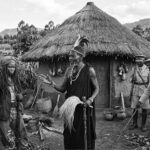
The Agĩkũyũ of Kenya experienced this misunderstanding. Yet closer examination reveals a coherent civilization centred on faith in Ngai, moral values, systems of leadership, ordered family life, meaningful rituals, and institutions governing every stage of life. Their society was neither random nor disorganised; it possessed structure, purpose, and a deep spiritual foundation. Sometimes history overlooks a civilization not because it lacked greatness, but because we were looking for greatness in the wrong places.
How should we measure a civilization fairly?
Imagine judging every language solely by English grammar. Other languages might appear defective, not because they are inferior, but because they were never meant to follow English rules. Civilizations can be misunderstood in the same way when they are measured against one cultural model. This happened to many indigenous African societies. Their religious traditions were often judged by whether they had scriptures, formal clergy, or monumental places of worship. When these features were absent, observers sometimes concluded that such societies had little or no religion. Modern scholarship has shown the weakness of this narrow approach.
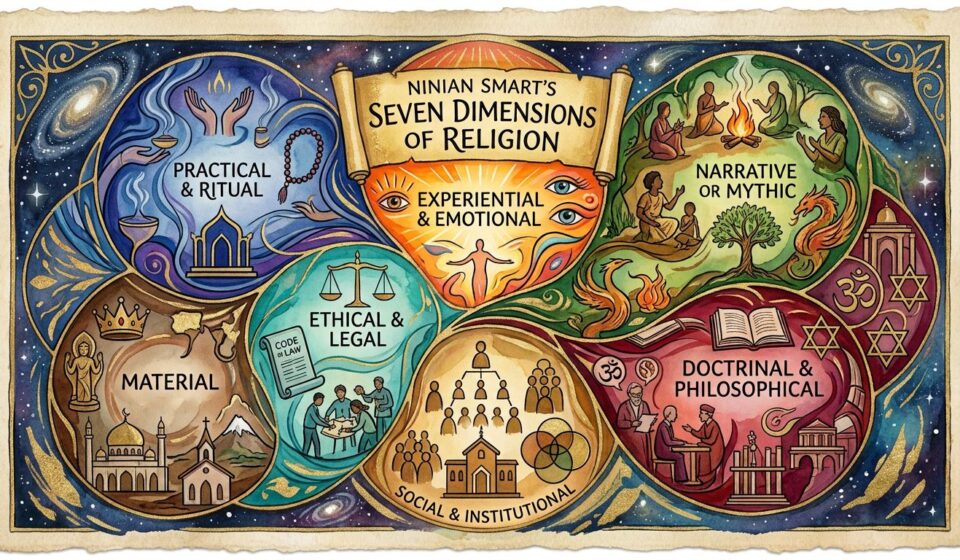
British scholar Ninian Smart helped broaden the academic study of religion by proposing seven dimensions through which mature religious traditions can be examined: spiritual experience, sacred narratives, beliefs, ethics, social institutions, rituals, and material expressions of faith. His framework has been applied across major world religions and indigenous traditions, making it a useful and balanced lens through which to examine the Ugĩkũyũ worldview. A fair investigation requires a fair standard. Only by applying consistent criteria can we properly understand civilizations different from our own.
What happens when the Ugĩkũyũ worldview is examined by the same standard?
The question is no longer whether colonial administrators or early missionaries recognised Agĩkũyũ religion. Their opinions are historically important, but they are not the final measure of reality. A fairer question is whether the Ugĩkũyũ worldview meets the same scholarly criteria used to study the world’s recognised religions.
The evidence points to a clear answer. The Agĩkũyũ possessed a fully developed religious tradition encompassing all seven of Ninian Smart’s dimensions. What some colonial observers dismissed as customs, tribal practices, or superstitions was a coherent worldview that explained humanity’s relationship with the Creator, shaped morality, organised society, strengthened families, guided justice, and gave meaning to every stage of life. This challenges a persistent colonial assumption: African religions were often measured against European Christianity rather than understood on their own terms. When examined through the same academic framework applied to major religious traditions, however, the Ugĩkũyũ worldview stands up remarkably well.
This is not an argument against Christianity or for one faith over another. Rather, it calls for consistency and fairness. Indeed, many ethical teachings associated with Jesus—love of neighbour, justice, honesty, generosity, care for the vulnerable, stewardship, and communal responsibility—resonate strongly with values already present within the Ugĩkũyũ worldview. This raises an important historical question: if such common ground existed, why was so much Agĩkũyũ heritage treated as something to be abandoned rather than understood?
Part of the answer lies in the history of Colonial Christianity, where the Gospel was sometimes presented alongside European cultural assumptions and colonial authority. Some African customs were therefore rejected simply because they were African, rather than because they contradicted the teachings of Christ. The distinction matters: the Gospel calls people to transformation, but transformation does not necessarily require abandoning the identity through which their history has been shaped.
Like the roots of the Mugumo tree, much of Agĩkũyũ civilization’s strength lay beneath the surface. Those roots sustained a society whose values shaped generations long before colonial rule and continue to influence Kenyan society today. Rediscovering those roots is therefore not an exercise in nostalgia or romanticism, but an attempt to understand the past through careful historical reflection and a respected scholarly framework. Viewed through that lens, the Agĩkũyũ emerge not as a people without religion or civilization, but as a people whose worldview deserves serious recognition alongside the world’s major religious and philosophical traditions. Civilizations deserve to be understood before they are judged, and measured fairly before they are dismissed.
What if faith was woven into everyday life rather than confined to places of worship?
The Experiential and Emotional Dimension
One of the misconceptions about traditional African religion is that it consisted mainly of rituals performed on special occasions. For the Agĩkũyũ, faith was not separate from ordinary life; it was woven into it. Their relationship with Ngai, the Supreme Creator, was intimate and practical, touching every stage of life from birth to death.
Ngai was understood as the giver of rain, harvests, children, wisdom, protection, and every good gift. His presence was recognised in the sunrise, the coming of rain, a successful harvest, and the everyday blessings that sustained life. Before planting, families sought His blessing; when rain ended a drought, they gave thanks; and at births, marriages, illness, and other significant moments, prayer expressed gratitude, hope, and dependence on the Creator.
Many prayers were offered while facing Kĩrĩnyaga (Mount Kenya), understood as the dwelling place of Ngai. Elders also gathered beneath the sacred Mugumo tree to pray for the community. These were not merely cultural ceremonies but expressions of reverence, humility, and trust in an active Creator.
The same instinct remains visible in Kenya today. Families pray before journeys, farmers seek God’s blessing before planting, students pray before examinations, and business owners dedicate new premises to God. The forms may have changed, but the underlying belief remains: important moments are best placed in God’s hands.
For the Agĩkũyũ, therefore, faith was not confined to a shrine, building, or particular day. It found expression in prayer, songs, blessings, sacrifices, thanksgiving, and communal life. There was no sharp division between the sacred and the ordinary; all of life belonged to God. Perhaps this is the enduring lesson of the experiential and emotional dimension: faith is not simply something professed in a place of worship but something lived through everyday choices and experiences. For the Agĩkũyũ, faith was never merely something to believe; it was something to live.
What if a civilization preserved its greatest library not in books, but in stories?
The Mythic and Narrative Dimension
Every civilization preserves its memory through stories. Long before written histories, communities used narratives to answer fundamental questions: Where did we come from? Why are we here? How should we live? What do we owe one another and God?
The Agĩkũyũ were no different. Their beliefs, history, and values were woven into stories passed from one generation to the next. At the centre was the account of Gĩkũyũ and Mũmbi, whom Ngai settled at the foot of Kĩrĩnyaga (Mount Kenya) and entrusted with the land and the responsibility of raising future generations. Whether understood as sacred history, cultural memory, or an origin narrative, the story conveys profound principles: life comes from God, land is a sacred trust, and every generation inherits both blessings and responsibilities.
But Agĩkũyũ storytelling extended far beyond origins. Around the evening fire, grandparents became historians, parents became philosophers, and elders became teachers. Through stories, riddles, songs, and proverbs, they passed on courage, honesty, patience, generosity, humility, and wisdom.
A story could teach what a lecture could not. A proverb could settle an argument; a riddle could sharpen the mind; and a tale about greed or wisdom could influence a child long into adulthood. Storytelling therefore entertained, but it also preserved history, transmitted faith, shaped character, and connected generations.
The Agĩkũyũ understood something modern educators increasingly recognise: people build identity through the stories they inherit and tell. When a community forgets its stories, it risks forgetting itself. In this sense, the fireside was more than a place of entertainment. It was the first classroom, library, and university. Knowledge did not need to be written to be valuable; it needed to be remembered, understood, and faithfully passed on. A people who lose their stories lose more than their past; they gradually lose their understanding of who they are. Sometimes the strongest libraries live not in books, but in the memories of a people determined never to forget.
Can a civilization possess profound philosophy without writing books?
The Doctrinal and Philosophical Dimension
A common misconception about traditional African societies is that they lacked philosophy because they produced few written theological or philosophical texts. Yet profound wisdom does not depend on books. Long before philosophy entered universities, communities explored life’s deepest questions through conversation, experience, and reflection.
The Agĩkũyũ wrestled with the same questions faced by other civilizations: Who created us? Why are we here? What makes a person good? How should we relate to God and one another? What is justice? What happens when truth is ignored? These questions were discussed around fires, in councils of elders, during initiation, and at community gatherings. Philosophy was not confined to libraries; the community itself was the library. At the centre of this worldview was Ngai, the Supreme Creator, understood as eternal, sovereign, just, generous, and concerned with human affairs. Because life came from Ngai, people carried a threefold responsibility: to honour God, care for one another, and steward the world entrusted to them.
The Agĩkũyũ also understood that actions had consequences. Honesty strengthened society; greed weakened it; justice restored harmony; and wisdom promoted peace. These principles were preserved through proverbs, experience, and the accumulated wisdom of elders rather than systematic theological texts. The proverb “Mũthamaki ndarutagwo na njamba imwe”—a leader is not advised by one person alone—captures this philosophy. It teaches that leadership requires humility, consultation, and willingness to listen because no individual possesses every answer. The principle remains relevant today, reflected in boards, advisory committees, courts, and other forms of collaborative decision-making.
The deeper lesson is that wisdom is not measured by how loudly one speaks, but by how carefully one listens. The Agĩkũyũ did not merely ask how life should be lived; they asked why. Their lack of extensive written philosophical texts therefore should not be confused with a lack of philosophical thought. Some civilizations recorded their wisdom on papyrus, parchment, or paper; the Agĩkũyũ preserved theirs through memory, conversation, proverbs, and lived practice. A civilization’s wisdom is measured not by the number of books it produces, but by the quality of life its philosophy inspires. Some libraries have walls; others live in the memories of a people. Both preserve knowledge.
What kind of people was Agĩkũyũ society trying to produce?
The Ethical and Legal Dimension
Every civilization must answer a fundamental question: What kind of people should our children become? The Agĩkũyũ valued prosperity, but they placed something deeper at the centre of society: character. Wealth could be lost and regained, but once honesty, trust, and integrity disappeared, the whole community suffered. Children therefore learned honesty, generosity, diligence, humility, hospitality, courage, and respect from an early age. Parents taught these values, grandparents reinforced them through stories and proverbs, and neighbours helped correct children because everyone understood
that today’s child would become tomorrow’s parent, elder, or leader.
These values were also reflected in customary law, which governed marriage, inheritance, land, leadership, compensation, and family responsibilities. Justice was not simply about punishment; its deeper purpose was restoring harmony. When, for example, livestock was stolen, elders were concerned not only with identifying the offender but also with repairing trust and enabling the families to live together again. This resembles what modern legal scholars call restorative justice—an approach the Agĩkũyũ practised long before the term entered academic language. Their understanding was simple: communities flourish when broken relationships are repaired. The principle is captured in the saying “Mũndũ nĩ mũndũ na andũ”—a person becomes a person through other people. Human dignity and success were understood within relationships, not apart from them.
This communal ethic also raises an important question about Christianity’s encounter with African cultures. When the early Church faced the question of whether Gentile converts first had to abandon their cultural identity, the Jerusalem Council in Acts 15 concluded that they did not need to become Jews to follow Christ. They were asked to reject practices that directly conflicted with the Gospel. Faith in Christ did not require the destruction of cultural identity.
What, then, might have happened if this principle had consistently guided Christianity’s encounter with the Agĩkũyũ? Rather than replacing an already developed moral tradition, the Gospel could have affirmed values such as truthfulness, justice, respect for life, care for the vulnerable, stewardship, family responsibility, and reverence for God, while challenging only practices genuinely contrary to Christ’s teachings.
The issue, therefore, is not the teachings of Jesus. Many of His ethical ideals resonate strongly with values already present in Agĩkũyũ society. The difficulty arose when Colonial Christianity sometimes confused the transformation brought by Christ with the abandonment of African cultural identity. Some practices were rejected because they were African rather than because they actually contradicted Scripture. Recognising this distinction does not weaken Christianity. It reflects the wisdom of the early Church, which allowed the Gospel to take root across different cultures while affirming what was true, just, and life-giving. A civilization is remembered not merely for the wealth it creates, but for the character it cultivates. The strongest laws do more than punish wrongdoing; they restore the relationships that make community possible.
What held Agĩkũyũ society together for generations?
The Social and Institutional Dimension
Every enduring civilization depends on institutions that preserve identity, shape character, resolve conflict, and prepare each generation to carry forward the wisdom of those before it. The Agĩkũyũ understood this well. Their society was not sustained by one powerful leader but by interconnected institutions and ordinary people fulfilling shared responsibilities.
The family was the first classroom. Children learned values from parents, grandparents, and the wider community, which shared responsibility for raising the next generation. Every elder had both the right and duty to guide young people because the community understood that its future depended on their character. Beyond the household was the mbari, the extended family system that provided identity, belonging, mutual support, and continuity. It connected individuals to a larger history and functioned both as a social safety net and a living archive of family memory.
Leadership was strengthened through the Kiama, a council of respected elders whose experience guided community affairs. Major decisions were not normally left to one individual; consultation, dialogue, and consensus were valued because wisdom was understood to emerge from listening to many voices. The age-set system also prepared young people for adulthood by gradually introducing greater responsibilities. Leadership was cultivated rather than improvised, with each generation prepared to inherit both privilege and duty.
Marriage further strengthened these institutions. It was not merely a private agreement between two individuals but a union that connected families and expanded networks of mutual support. Each institution reinforced the others: strong families produced responsible citizens, responsible citizens strengthened leadership, and wise leadership protected families. The principle remains relevant today. Nations and organisations cannot depend on charismatic leaders alone; they require strong families, trustworthy institutions, effective schools, accountable leadership, and communities that invest in the future.
The Agĩkũyũ therefore demonstrate that civilization is not measured only by castles, armies, or monuments. Its deeper strength lies in the institutions that quietly shape everyday life and carry values across generations. Civilizations endure not because of extraordinary individuals, but because ordinary people are shaped by strong institutions.
Can a civilization be great without pyramids or cathedrals?
The Material Dimension
Great civilizations are often recognised through monuments—the pyramids of Egypt, China’s Great Wall, Rome’s architecture, or Europe’s cathedrals. But must a civilization leave behind monumental buildings to prove its greatness?
The Agĩkũyũ offer a different perspective. Their civilization was expressed not through grand monuments but through landscapes, homes, tools, crafts, and everyday objects that reflected their worldview and practical ingenuity. At its centre stood Kĩrĩnyaga (Mount Kenya), a constant reminder of Ngai’s sovereignty and presence. The sacred Mugumo tree provided a place where elders gathered for prayer, thanksgiving, and communal covenant. Rivers, forests, and fertile land were understood not simply as resources but as gifts from God entrusted to the community and future generations.
The homestead itself reflected careful organisation. Granaries represented stewardship and preparation; the thingira represented leadership and counsel; livestock provided economic security and strengthened family relationships. Pottery, baskets, gourds, stools, beadwork, carvings, musical instruments, and farming tools demonstrated creativity, craftsmanship, and practical knowledge.
Their relationship with nature was equally significant. Forests protected water sources, certain trees were preserved for their ecological and spiritual importance, and land was regarded not merely as property but as a sacred trust carrying responsibilities as well as privileges. Principles now associated with environmental conservation and sustainable development were already embedded in everyday Agĩkũyũ life.
This challenges the idea that monuments alone define civilization. Stone may survive for centuries, but values can endure even longer when passed faithfully between generations. The Agĩkũyũ may not have built pyramids reaching toward the sky, but they built a way of life that taught people to honour God, care for creation, and live responsibly within community. The greatest monuments of a civilization are not always built with stone; sometimes they are built in the character of its people. Civilization is revealed not only by what a people create, but by what they choose to preserve.
Why did every stage of life deserve a sacred ceremony?
The Ritual Dimension
Every mature civilization develops rituals because they give meaning to life’s important transitions. They remind people who they are, where they belong, and what responsibilities accompany each new stage. The Agĩkũyũ understood this deeply. Life was not simply a journey from birth to death; significant transitions were marked by ceremonies connecting the individual to Ngai, family, and community.
These rituals were not empty performances. They were living classrooms where values were taught and identity strengthened. Naming connected a child to family history and reminded them that they belonged to a story larger than themselves. Initiation prepared young people for adulthood by teaching discipline, courage, self-control, respect, and responsibility. Adulthood was understood not simply as gaining freedom but as accepting greater responsibility. Rights and responsibilities walked together. Marriage was equally significant. It was not merely a single wedding day or private agreement between two individuals, but a series of carefully ordered stages that united families, strengthened trust, and connected generations.
Rituals also marked both joy and hardship. Harvest celebrations expressed gratitude for God’s provision; prayers during drought acknowledged dependence on His mercy; reconciliation ceremonies restored relationships; and funeral rites honoured the dead while comforting the living. In every season, ritual reminded the community that Ngai remained present.
The same human need continues today. Graduations celebrate achievement, weddings affirm commitment, national commemorations honour sacrifice, and churches mark births, leadership, and bereavement. The forms may change, but rituals continue to transform ordinary events into meaningful experiences.
For the Agĩkũyũ, rituals preserved more than tradition. They preserved identity, transmitted values, strengthened community, and prepared each generation to carry its heritage forward. Rituals are bridges carrying a civilization’s values from one generation to the next. When a society gives meaning to every stage of life, no stage is lived without purpose.
So, What Does the Ugĩkũyũ Civilization Teach Us Today?
Viewed through Ninian Smart’s Seven Dimensions of Religion, the Ugĩkũyũ worldview reveals a mature and coherent religious tradition. It contains belief in a Supreme Creator, sacred narratives, a developed philosophy of life, ethical teachings, social institutions, meaningful rituals, and material expressions of faith. By the same framework used to study Christianity, Islam, Judaism, Hinduism, Buddhism, and other recognised traditions, the Ugĩkũyũ worldview meets all seven dimensions.
This challenges the colonial assumption that civilization arrived in Kenya with European rule. Long before colonial government, the Agĩkũyũ had developed systems of faith, morality, justice, family, leadership, education, environmental stewardship, and communal responsibility. Recognising this does not require pretending that Agĩkũyũ society was perfect. No civilization is. Like Israel, Greece, Rome, India, China, and Europe, it contained both achievements and shortcomings. What it deserves is a fair evaluation rather than dismissal based on colonial assumptions.
The same distinction must be made between the teachings of Jesus Christ and the historical expression of Colonial Christianity. Jesus taught love of God and neighbour, justice, mercy, care for the vulnerable, and human dignity—values that resonate with many principles already present in Agĩkũyũ society. The problem arose when following Christ was sometimes presented as requiring the abandonment of African cultural identity.
The early Church itself offers a different model. In Acts 15, the Jerusalem Council concluded that Gentile believers did not need to become Jews to follow Christ; practices that directly conflicted with the Gospel were to be rejected, but cultural uniformity was not required. The Gospel could therefore take root in different cultures without destroying their identity.
One cannot help wondering how differently history might have unfolded had this principle consistently guided Christianity’s encounter with the Agĩkũyũ. The Gospel could have affirmed what was true, just, and life-giving while transforming practices that genuinely conflicted with Christ’s teachings.
Perhaps the deepest lesson is that the Agĩkũyũ were never an afterthought in God’s creation. Long before missionaries arrived or colonial boundaries were drawn, people lived on the slopes of Kĩrĩnyaga, knew the Creator as Ngai, raised families, pursued justice, cared for creation, and sought peace within their communities. Their history did not begin with colonialism.
Rediscovering this truth is not a rejection of Christianity or a romanticisation of the past. It is an invitation to recognise that God had not abandoned Africa and that Christianity did not need to erase African inheritance to proclaim Christ. Had the spirit of Acts 15 guided that encounter more consistently, Christianity in Kenya might have developed through cultural fulfilment rather than cultural replacement.
A people who lose their memory become vulnerable to believing they never had a history worth remembering. We therefore need neither to invent a glorious past nor deny its shortcomings. We need to recover it honestly. The Agĩkũyũ were not a people waiting to be civilized. They were a people whose civilization was waiting to be understood. Every civilization deserves to be judged by the truth of its history, not by the prejudices of those who first described it. When we rediscover the dignity of our past, we gain the confidence to shape our future.

Other Articles